Ecuador vs. Peru for a beginner mountaineer
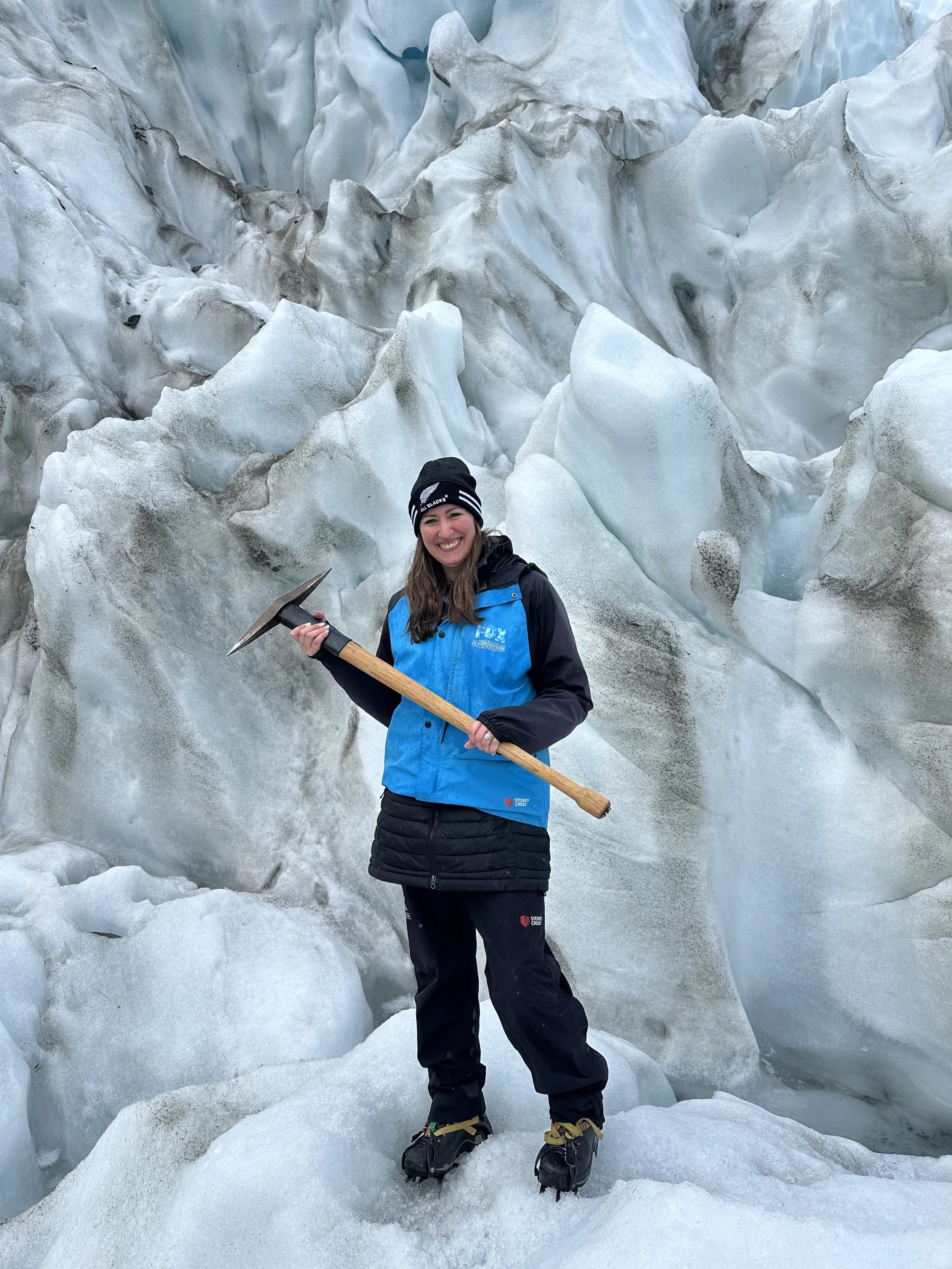
Mountaineering is often looked at as a sport of sheer willpower, but the reality is that it’s a sport of constant, forced flexibility. Recently, my plans for Ecuador hit a wall. Not enough people signed up for the trip, so my guide company wasn’t going to run it.
They gave me a few options:
Pay extra for a private trip.
Join the same trip in the fall.
Go to Peru instead on similar dates.
Get a refund.
I don’t have the money to pay for a private trip, and I really want the group learning/bonding experience. And I don’t want to give up altogether, so I eliminated options 1 and 4 pretty easily.
Wait for Ecuador? Or pivot to Peru?
My gut instinct right away was to switch to Peru. To be honest, I’m a little burnt out on training, and to have to wait even longer for the pay off sounded like such a slog.
But I also didn’t want to lose out on experience that would prepare me for Everest if Ecuador is the best training ground.
I sent a message to my fellow Uphill Athletes to see if anyone had climbed there. The response was overwhelmingly positive. Steve House chimed in, too:
“I’ve climbed and guided in both places and personally I prefer the traveling and the climbing in Peru. I’ve climbed Tocllaraju and it is incredibly beautiful. When you get up high, you can see right down the other/east side of the range. Incredible summit and not easy.”
Point Peru.
Next, I jumped on a call with Alpenglow. I told them that I don’t really WANT to wait longer for Ecuador but I’m willing to do so if it sets me up better long term for Everest than Peru.
“Actually,” Griffin said, “Peru is more similar to what you would experience on Everest.”
Peru vs. Ecuador
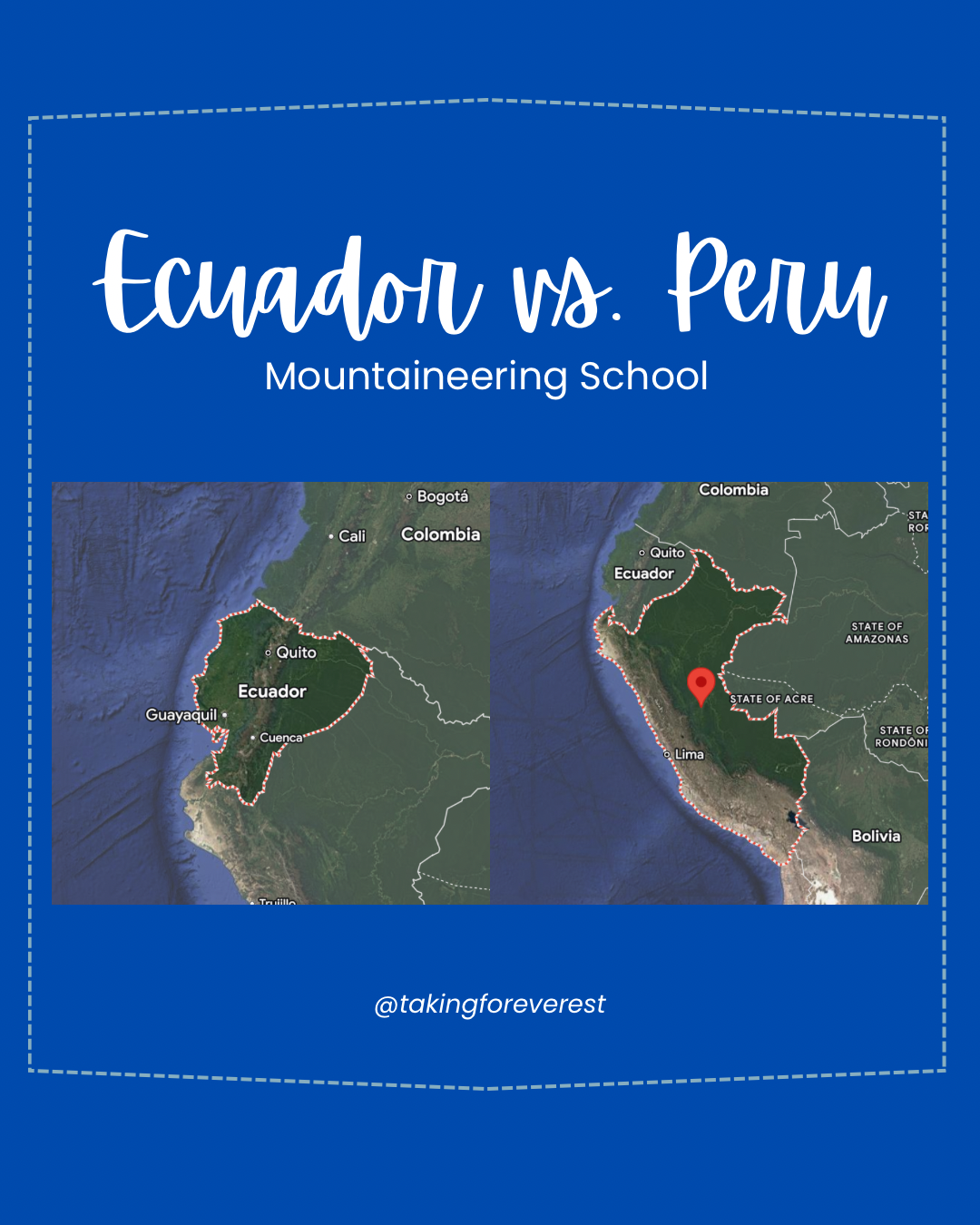
Let’s do a little compare and contrast.
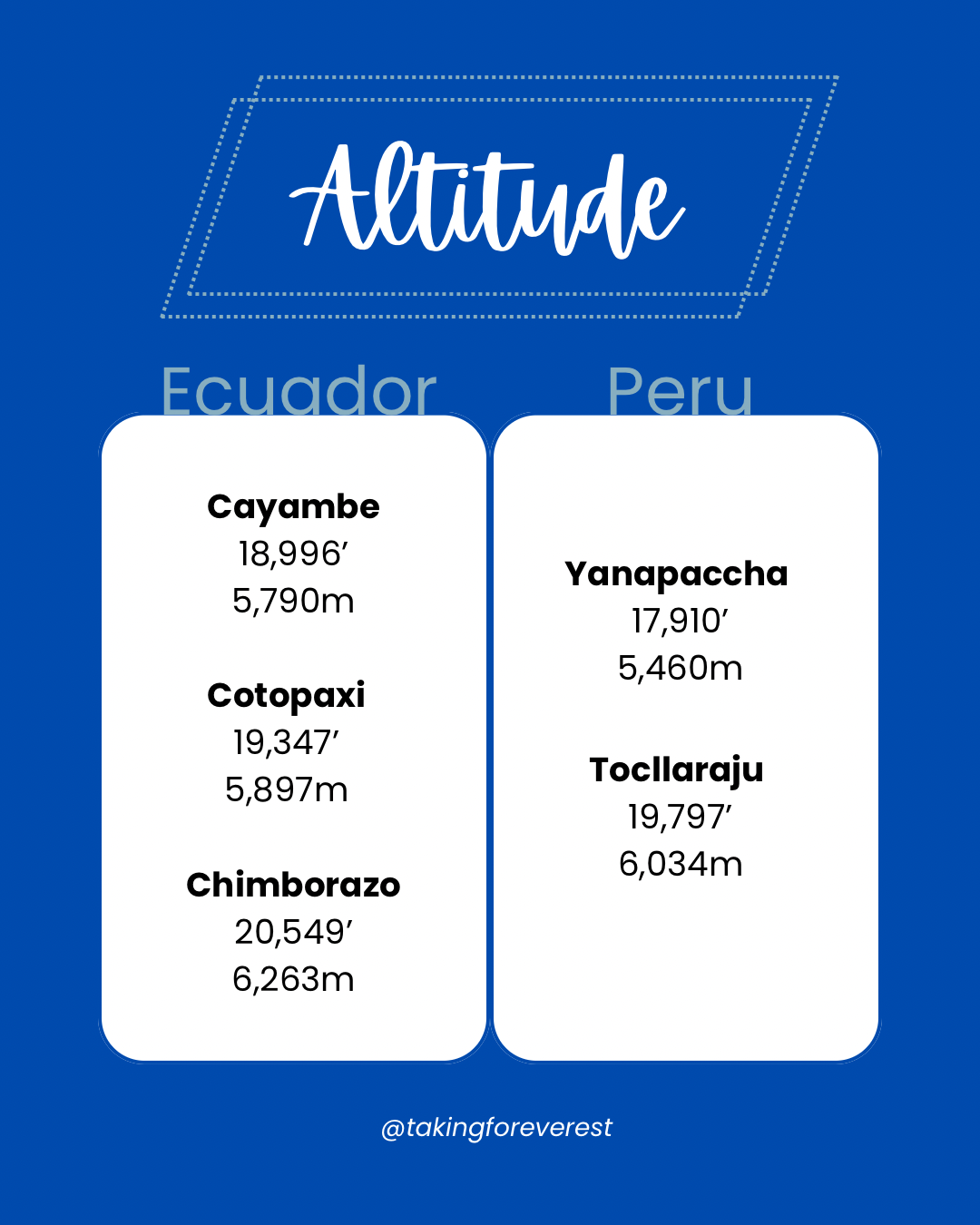
Elevation
Ecuador - Cayambe (18k), Cotopaxi (19k), Chimborazo (22k)
Peru - Yanapaccha (18k), Tocllaraju (19k)
I’m a bit disappointed about missing out on Chimborazo - the peak is the closest point on earth to the sun because of the bulge at the equator. Just a fun milestone to hit!
Tocllaraju, however, is still taller than Kilimanjaro, so it would still be an elevation milestone for me if I made it to the top.
Skills
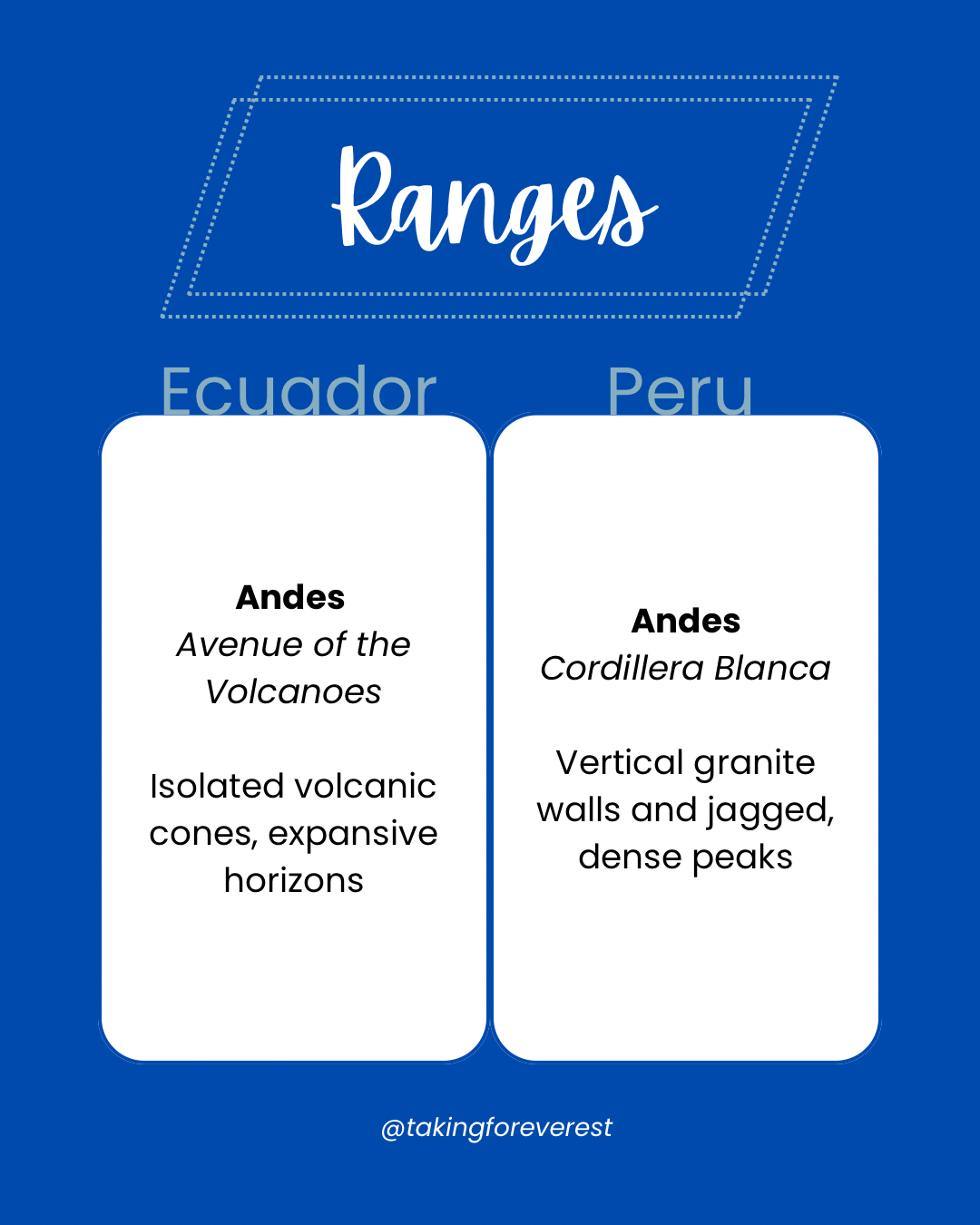
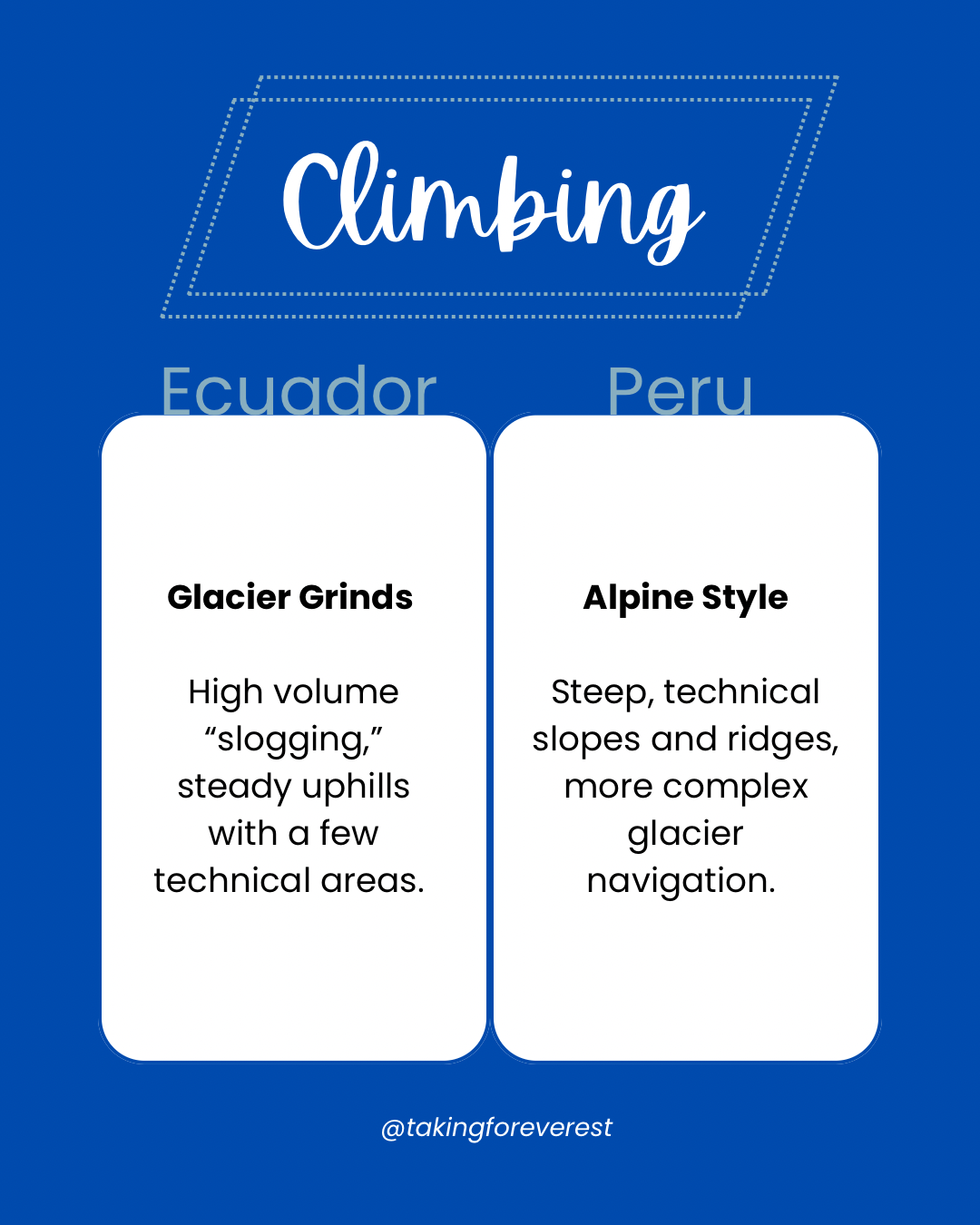
Ecuador - “Walk ups” with some technical areas
Peru - Steep, jagged & technical
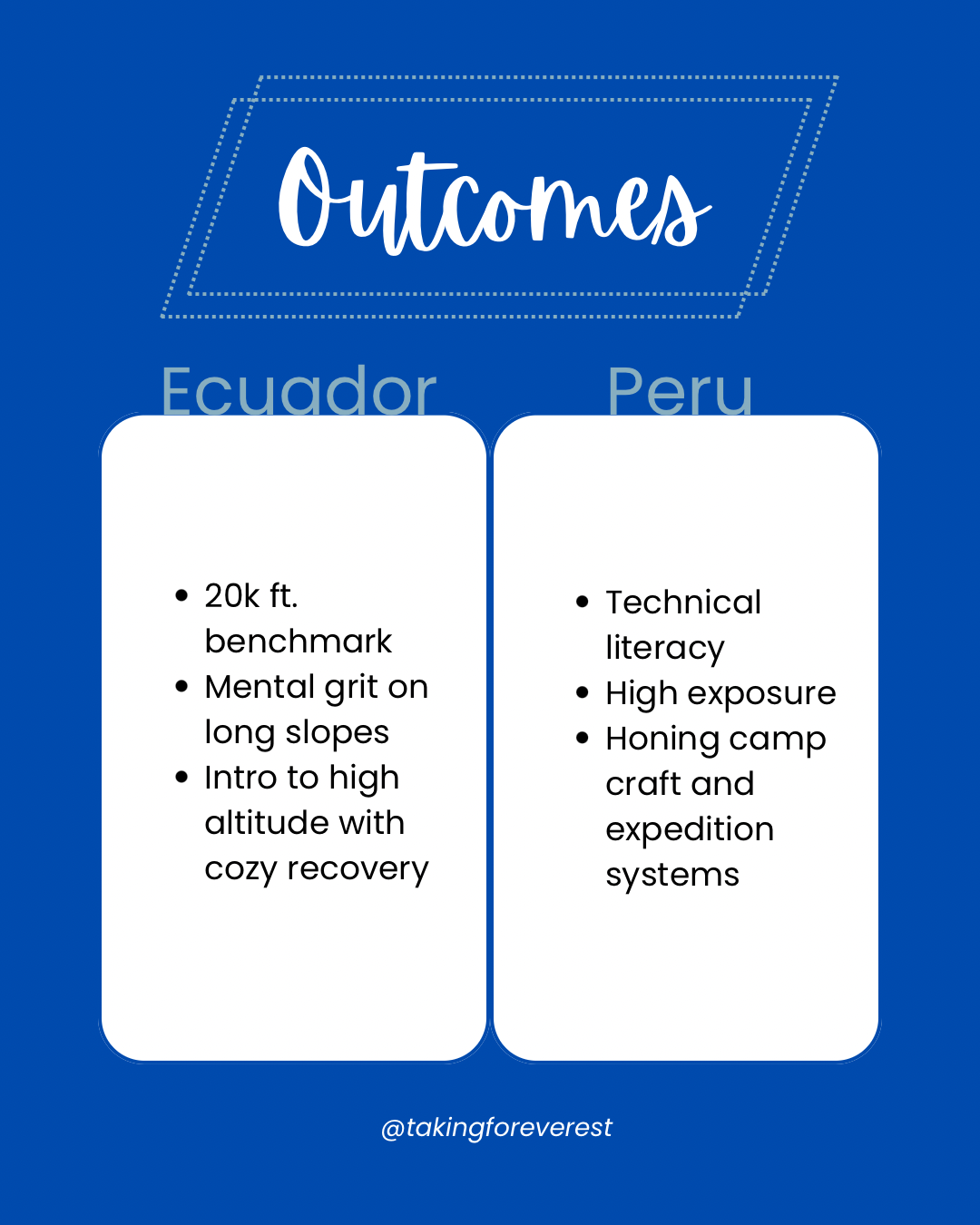
Both trips are Mountaineering Schools with similar learning outcomes and both are well glaciated, but the glaciers on the Peru peaks are more jagged and technical (requires more specialized techniques and tools, i.e. ice axes). Peru therefore requires a bit more fitness.
Lodging
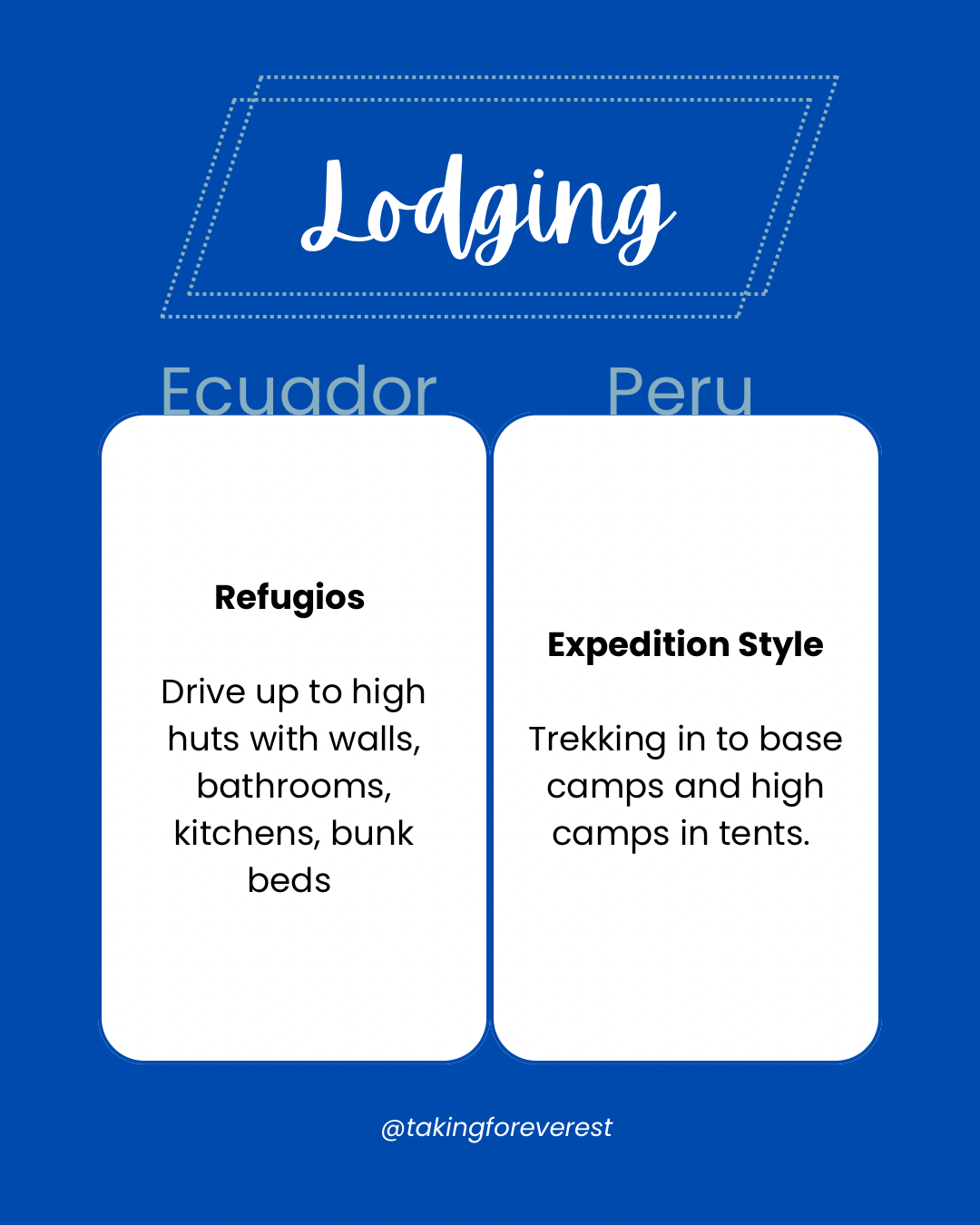
Peru - Remote backcountry camping
Ecuador - Refugios/mountain huts and haciendas
Ecuador as Griffin from Alpenglow described it is a “nice middle ground,” because you can drive so far up the mountains and stay in lodges rather than camping the whole trip. Peru requires trekking in and setting up a base camp.
I was sort of looking forward to being a bit more comfortable in Ecuador this time around, but the camp craft skills learned in Peru will be invaluable for Everest and was something I was feeling nervous about to begin with.
The Decision
Ecuador: More comfortable, more cultural immersion. Peru: harder, more remote, but better prep for Everest.
As much as I was looking forward to Ecuador, my north star remains. Everest requires being comfortable in uncomfortable places. Peru is going to make me very uncomfortable, and that is exactly why I’m going.
It would be easy to look at a destination change as a consolation prize, but that’s a mistake.
The Cordillera Blanca is the "Andes’ crown jewel" for a reason. Next stop: Huaraz!