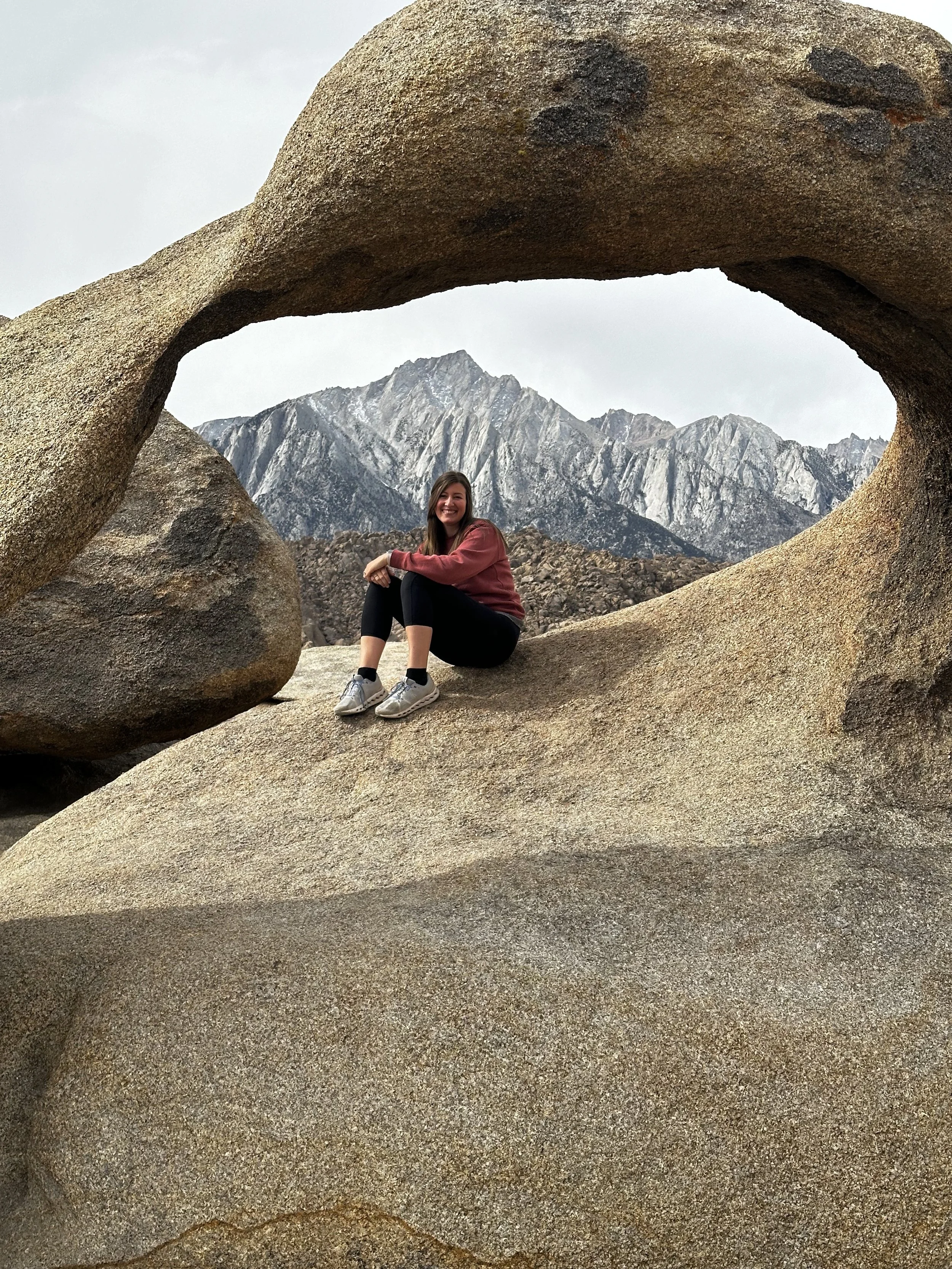
From day-hiker to the death zone
In 2016, as I sat in my office cubicle, I stumbled across Adrian Ballinger and Cory Richards’ Everest climb on Snapchat. I followed along religiously, and watched every. single. snap.
Nine years later, I stood on top of Kilimanjaro, and something… clicked. Our guides would say “Pole pole”—Swahili for “slowly, slowly.” It became my mantra and the perfect, self-deprecating summary of this entire project.
This journey is about growing into the climber (and person) who can actually handle the world’s biggest mountain (ethically and without dying!).
“TakingForEver..est” is my mission statement: one mountain, one specific skill, one grueling training session, and one hard-earned paycheck at a time.
Want the full story?
Balancing Everest prep with the 9-5 grind
Transparency, trust, & partnership
I’m sharing this journey with all sides of the story: The fear, the failures, the true financial cost (which might be the most horrifying part!), and the gear that actually works. Why?
Accountability (For Me): Speaking my dreams out loud keeps me accountable.
Permission (For You): Maybe it gives someone else permission to believe in their big, scary, long-haul dream.
Transparency (For Partners): This multi-year arc is a transparent, real-world testing ground. If you’re a brand that makes the best jacket, pack, or trekking pole, I’m the person who is going to rely on it, try to break it, and tell a highly engaged audience exactly how it performed.
Multi-year Everest plan
This is the meticulously slow plan that will ruin my weekends for the foreseeable future:
Learn the Basics (2025-26): Technical training, crevasse rescue, and spending obscene amounts of time in the gym (and on smaller peaks).
Level Up (2027-28): Push the limits even higher and gain more expedition experience and independence on 7,000m peaks.
Test High-Altitude Expeditions (2029?): Serious climbs to see how my brain handles severe hypoxia and how my gear holds up.
The Big One. Everest: Slow, steady, and hopefully well-sponsored.


Join my journey
FAQ
-
The total estimated cost of a safe, guided expedition to Mount Everest is currently between $60,000 and $100,000+. My goal is to break down this intimidating financial reality by documenting the cost of every stage, from the initial gear purchases to the guide service fees. I am funding this through my 9-5 side hustle, intensive long-term savings, and—crucially—by partnering with ethical brands who share this vision.
-
Training is primarily split between sea-level endurance work (running, weighted pack hikes) and high-altitude conditioning. Current training grounds include the wonderfully flat Cincinnati, Ohio and upcoming major expeditions to Ecuador's volcanoes then intermediate 7,000-meter and 8,000-meter peaks (specific peak announcements will be posted when booked). Every location serves as a transparent test site for gear performance.
-
For someone like me starting from a day-hiker level, the process is a marathon, not a sprint. My current plan is a multi-year journey (5+ years) dedicated to skill acquisition (technical climbing, crevasse rescue), financial savings, and building the necessary high-altitude experience required for a safe summit attempt on Mount Everest.
-
The next confirmed major expedition is to the high-altitude peaks of Peru (Yanapaccha and Tocllaraju) to practice technical and expedition skills. After that, I hope to book Aconcagua for the ‘27-28 season.
-
There are three main ways to help me stay on track:
Engage: Read, comment, and share my posts! Every share helps expand our community and reach potential partners, and keeps me motivated to keep working!
Subscribe: Join the newsletter to receive training updates and early access to gear reviews.
Partner: If you represent a brand interested in long-term, candid gear testing and exposure, please visit my dedicated Sponsor & Partnership Page for opportunities.