The back of the pack: My experience mountaineering in Peru
The inevitable yearning
When you tell people you are heading off to climb mountains in Peru, they tell you that you are brave. They tell you that you are inspiring for following your dreams. But sitting at the gate on June 12th, it didn't feel like a courageous step forward; it felt like a giving in. The yearning to be back in the high altitude had just become too loud to ignore.
The morning had already been a jumble of nerves. I had packed everything perfectly the night before, only to get a sudden burst of panic and rip it all apart hours before leaving. It got so bad I had to have my dad drive over a second luggage scale because I didn’t trust my own!
Landing in Lima, my guide, Nacho—a seasoned Ecuadorian who had spent twenty years guiding and ten with Alpenglow—was already waiting. Over breakfast, he was warm and easy to talk to. After, I walked down to the seaside cliffs to watch the surfers, stood by a statue of Mary and watched local runners stop to pray, and ate octopus and fresh ceviche in Barranco. We even stumbled across a massive, vibrant crowd of locals at JFK Park passionately trading World Cup playing cards. It was a funny, surreal slice of life.
But by the afternoon, a different reality set in.
Back in my hotel room, my head started absolutely pounding. Getting a severe headache at sea level is a special kind of mental sabotage. As the rest of the group headed out to watch the World Cup, I stayed back, downing Excedrin PM and ibuprofen, listening to the intrusive thoughts creep in: What am I doing here??
The road to 13,000 feet
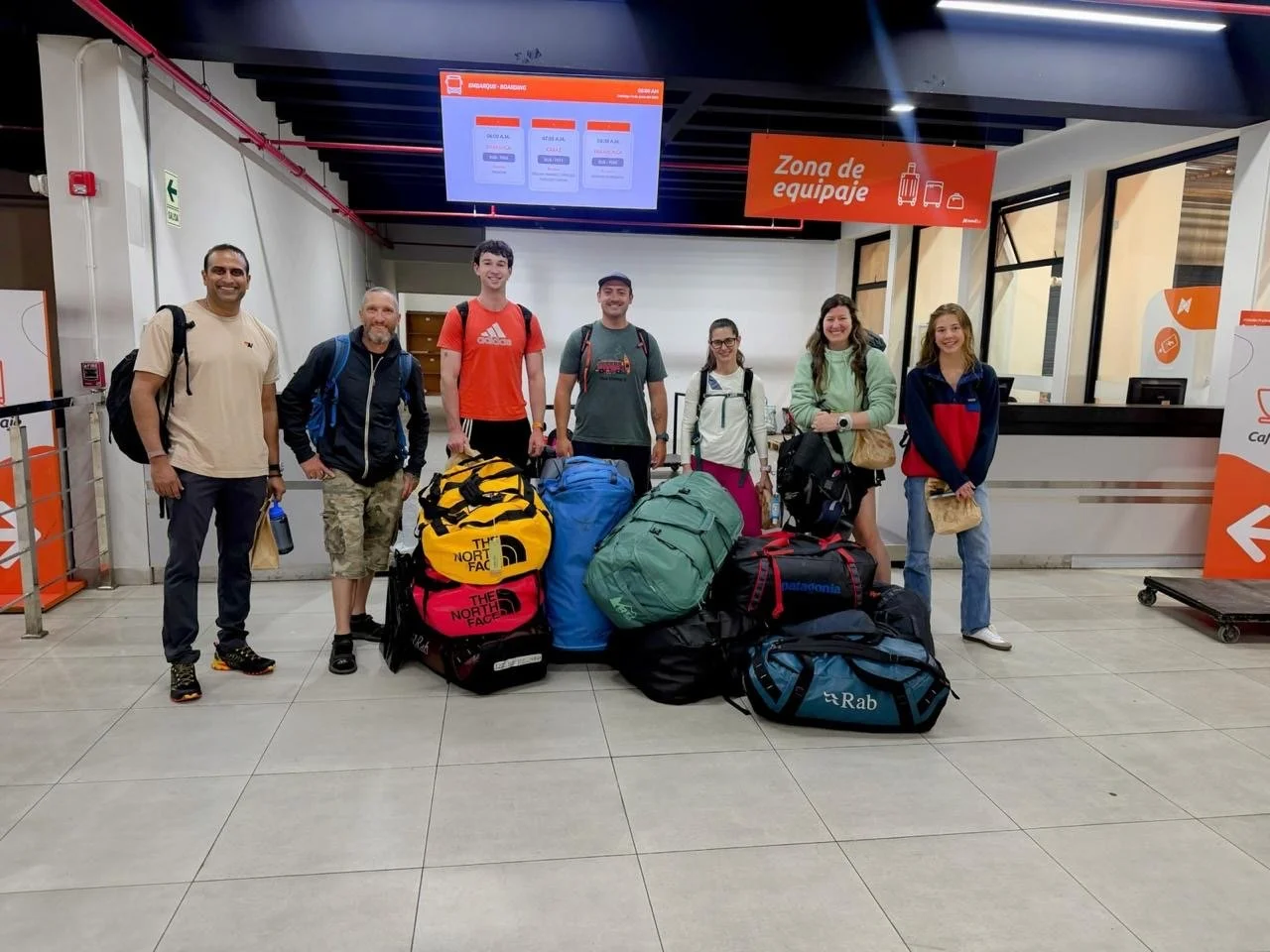
The next morning, we boarded the long, hot bus to Huaraz. The drive was a dizzying mix of internal reflection and external reality checks. Watching tiny hut houses pass by the window, I found myself grappling with the sheer unfairness of birth privilege. Meanwhile, inside the bus, the physical and social gaps within our team were starting to crystallize.
I listened to my teammates compare adventure stories and training regimens, feeling a slow, creeping intimidation. By the time the bus climbed to 13,000 feet, the heat and the altitude caught up with me. My watch started buzzing to tell me my stress levels were high, and my heart rate was climbing.
We finally pulled up to a beautiful hotel in Huaraz, and there was a flash of pure mountaineering magic when Topo Mena casually walked into the lobby and joined us for dinner. But as I organized and reorganized my gear that night, I knew the easy part of the trip was officially over.
Left in the dust
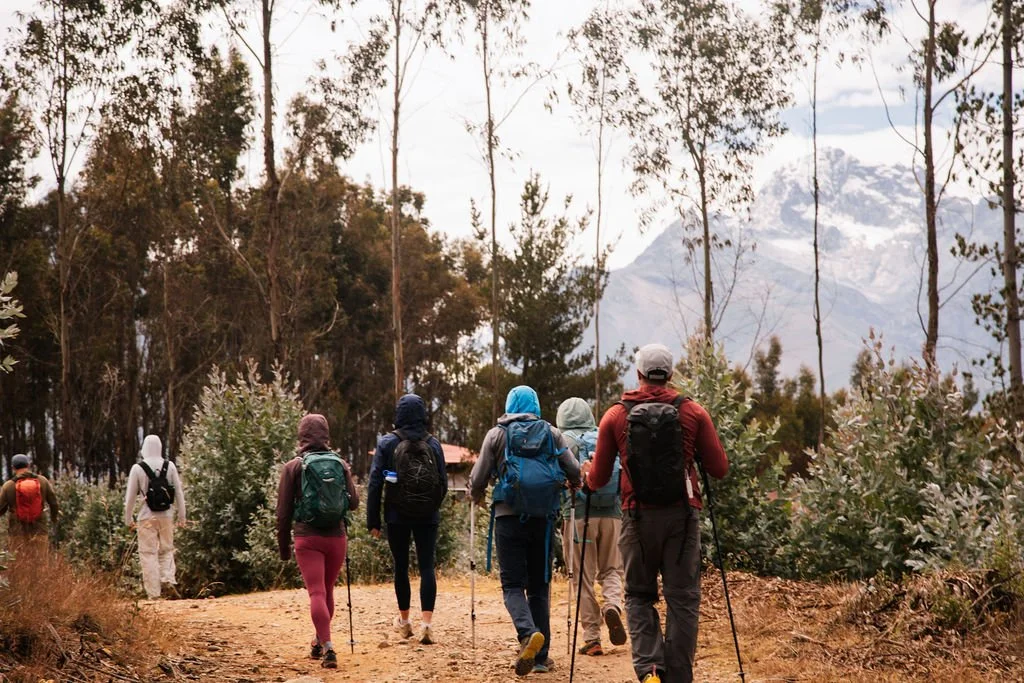
There is a massive difference between a brochure that says "beginner-friendly" and the actual reality of high-altitude steepness. On Day 4, that difference slapped me in the face.
The plan was a standard acclimatization hike. The moment our boots hit the incline, the group exploded forward. They went so fast they literally left me in the dust. The second guide, Micher, hung back with me, but our rhythm was completely broken. Every time I managed to struggle up to where he was waiting, he would instantly turn around and start moving again, vanishing out of sight.
I was, for all practical purposes, climbing completely alone.
My heart was pounding so loudly in my ears it felt deafening. I nearly had a panic attack twice, suffocating under the weight of my own racing heart rate and the crushing realization that I was entirely outmatched by the pace. I barely took a single photo.
When we finally stumbled back to the hotel, the rest of the group eagerly headed out to the local markets and grabbed lunch. I couldn't bring myself to move. I crawled into bed, skipped the outings, and stayed off my feet, deeply frustrated.
After dinner, while filling my water bottle in Nacho's room, I finally admitted it: "Today was rough." He told me to go at my own pace, not to worry about anyone else, and reminded me I was there to enjoy the process. It was comforting, but the mental spiral had already taken hold.
False summits and heavy tears
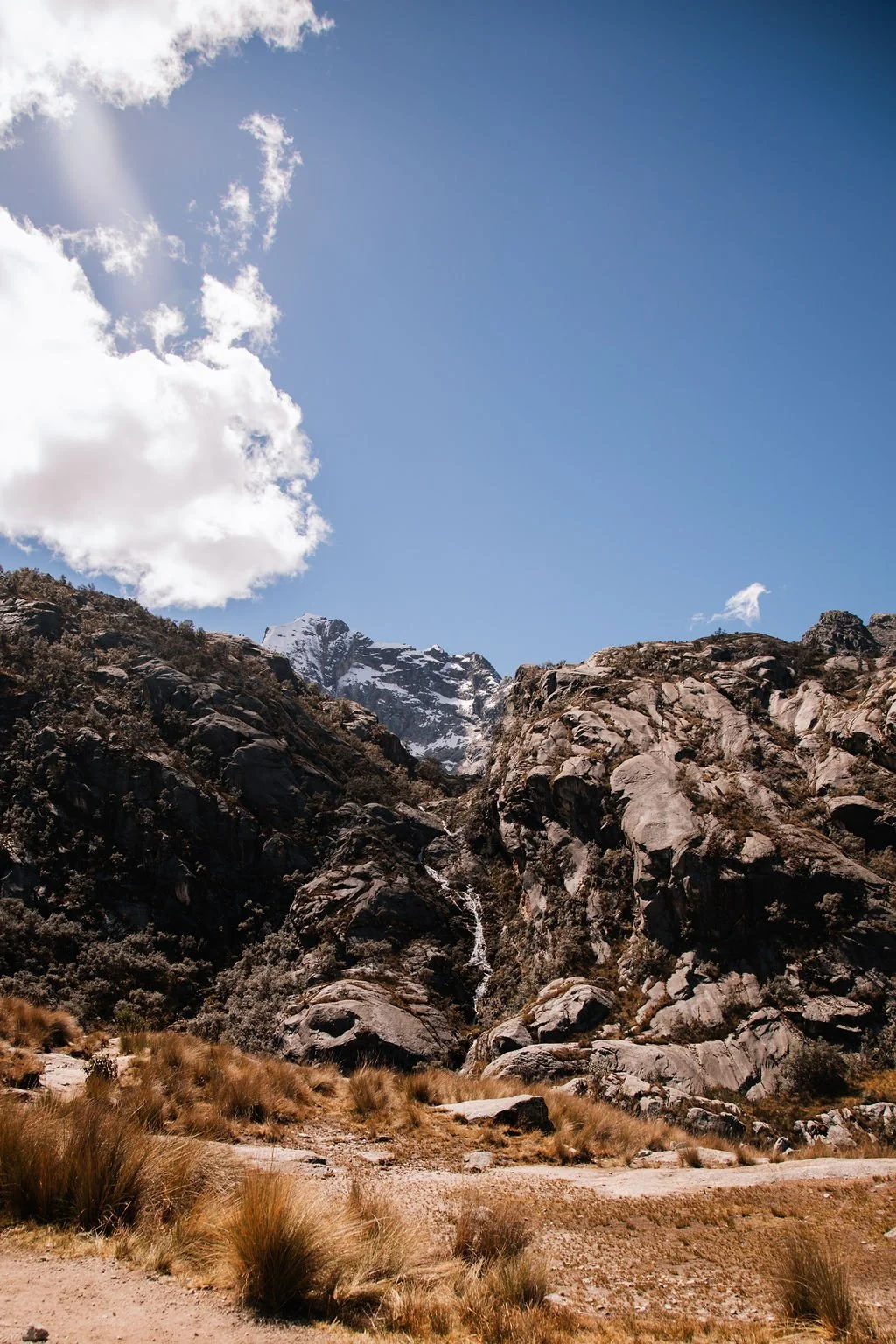
If Day 4 was a shock to the system, Day 5 was a test of absolute endurance.
The route to Churup Lake was a relentless staircase of giant rock steps. This time, Nacho stayed with me one-on-one, offering constant encouragement. It took every single ounce of physical and mental effort I possessed. We hit multiple steep rock scrambles with chains, gaining so much altitude in a short amount of time that they made me dizzy.
Nacho kept telling me, "You're almost there." But we weren't. We hit false summit after false summit.
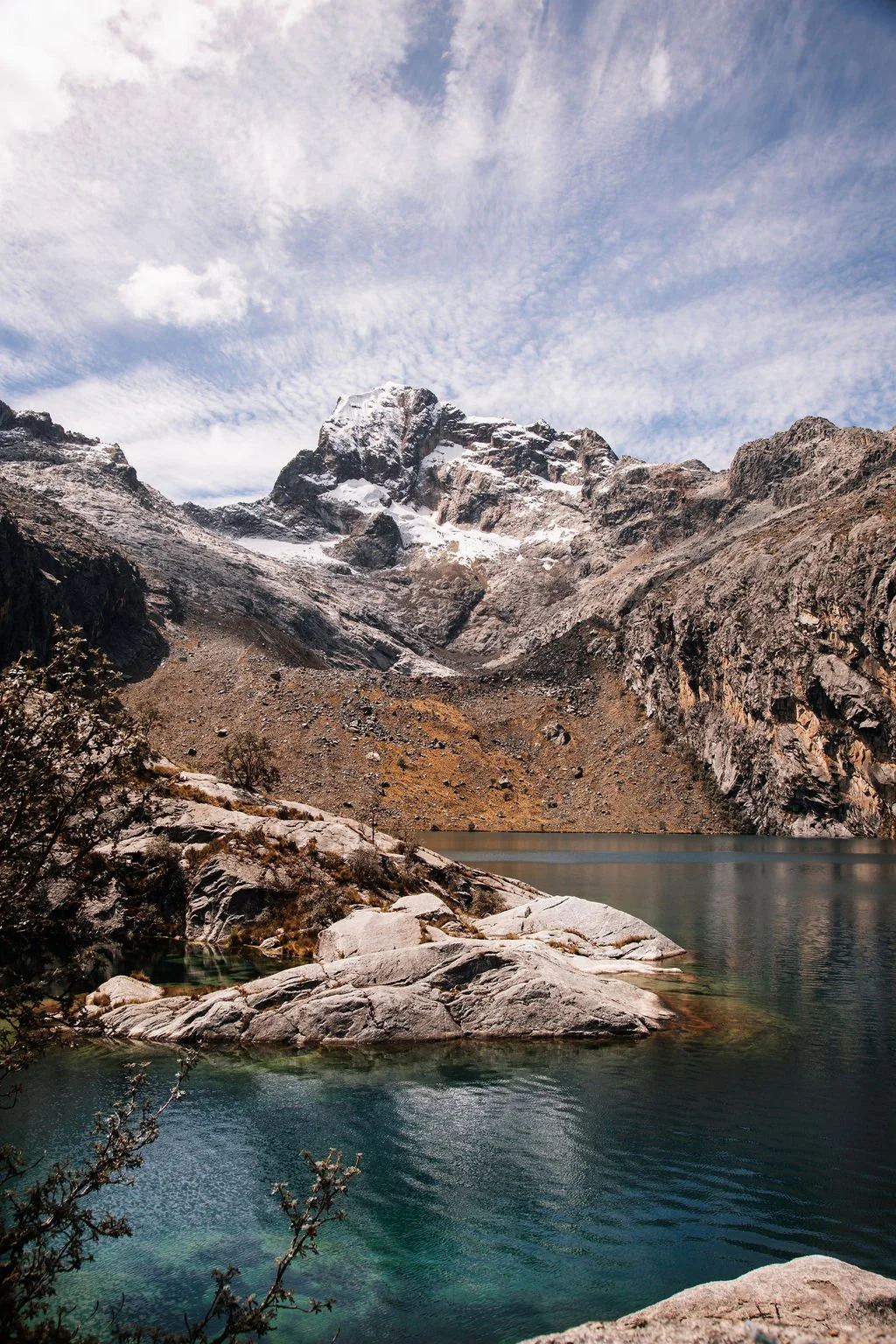
Laguna Churup
When we finally reached the lake, the view was stunning—a deep, dark blue and green alpine lake. But the triumph was instantly cut short. The rest of the team was already there, completely relaxed, one even taking a nap. They were rested and ready to head back down. Because I was so far behind, my arrival signaled the end of the break. I didn't really get to take it in or bond. I stayed long enough to eat, take a few photos, and head right back down.
The descent was a blur. We bypassed the chains, mostly sliding down the other side of the waterfall on our butts. I fully wiped out once. In the van back to the hotel, I was hot and car-sick on the winding, one-lane mountain road, gripping my seat as our driver narrowly avoided a head-on collision with a motorcyclist.
That night, after a hot shower, I packed my gear and FaceTimed my husband, Drew, and I just cried.
Looking into the screen, thousands of miles from home, a heavy realization started to form: Maybe the lesson here is that I don’t want to do all of this on my own. Maybe the magic of these wild places only exists for me when I am sharing them with the people I love.
Donkeys, avalanches, and human soup
Day 6 brought a temporary, beautiful reprieve. Nacho announced there would be no hiking; a bus would take us directly to base camp at 12,629 feet. I called my parents to say goodbye before losing service, loaded up, and tried to let my body recover.
Even in the valley, the high mountains were throwing out warning signs. While we were stopped at a construction delay in Yungay, news trickled down that Tocllaraju had avalanched again that morning, resulting in an accident with several climbers. It was a sober reminder of exactly where we were going.
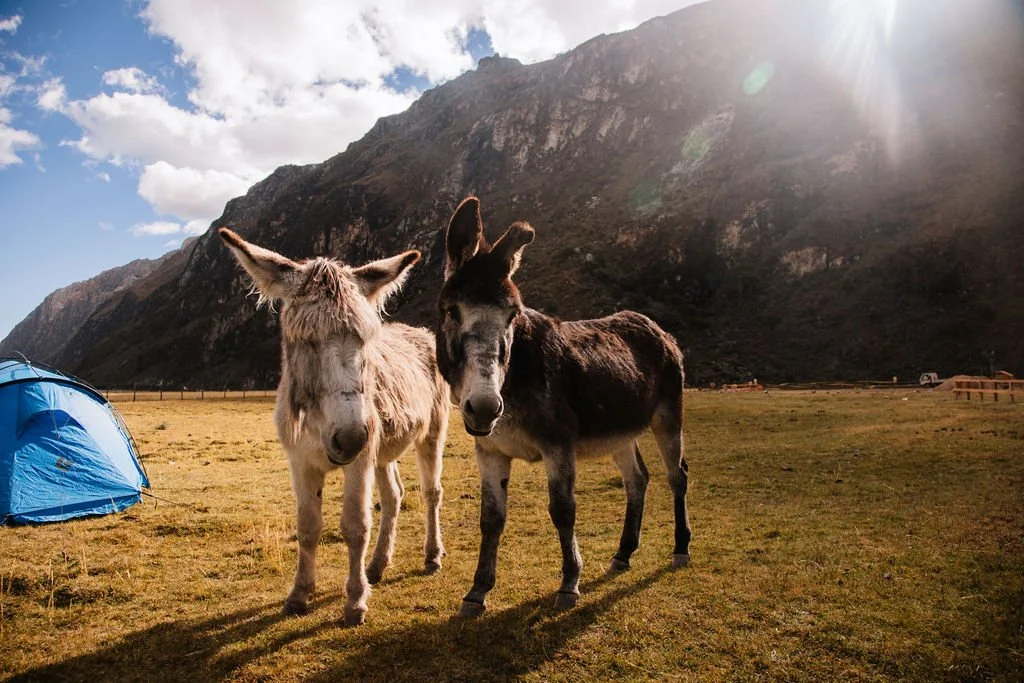
But base camp itself brought a bizarre, much-needed dose of levity. Our cook and his wife made incredible food, and the camp was alive with high-altitude quirks. The local donkeys raided our camp and took off with Jacob’s sun hoodie. Emily compared the chewed hoodie to the Shroud of Turin, and Nacho had us rolling with stories of his younger, wilder guiding days. That night, the sky cleared up enough for me to set up my tripod, lose myself in nighttime photography, and just chat with Jacob under the stars. For a second, the pressure eased.
Then came the morning.
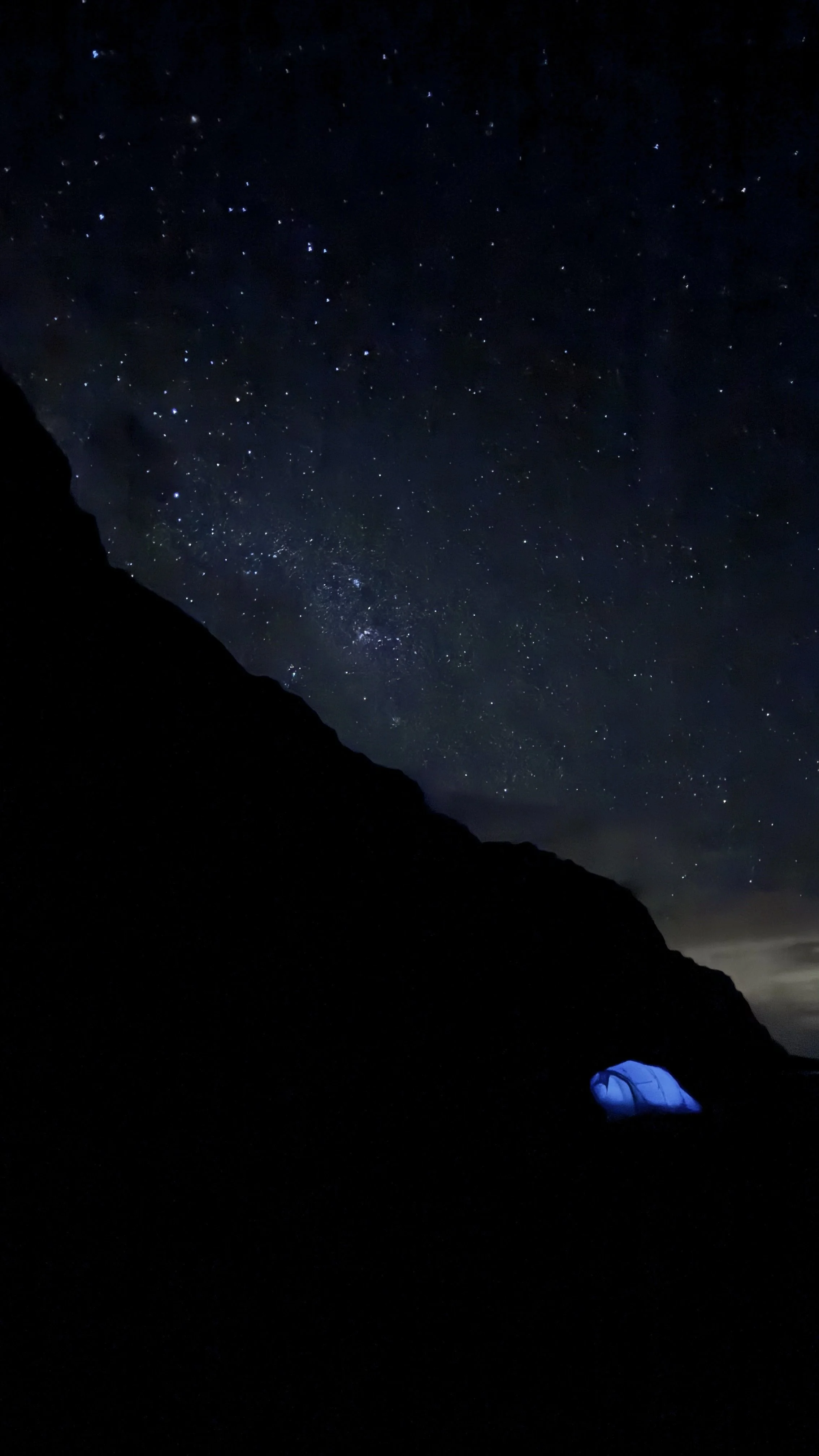
Yanapaccha Base Camp
The breakdown at the lake
If I had a decent night, Day 7 might have gone differently. Instead, I woke up to a raging migraine and a miserable tent mishap where I managed to pee on my own pants. To top it off, a donkey had apparently chewed on my trekking pole overnight, leaving it covered in slobber.
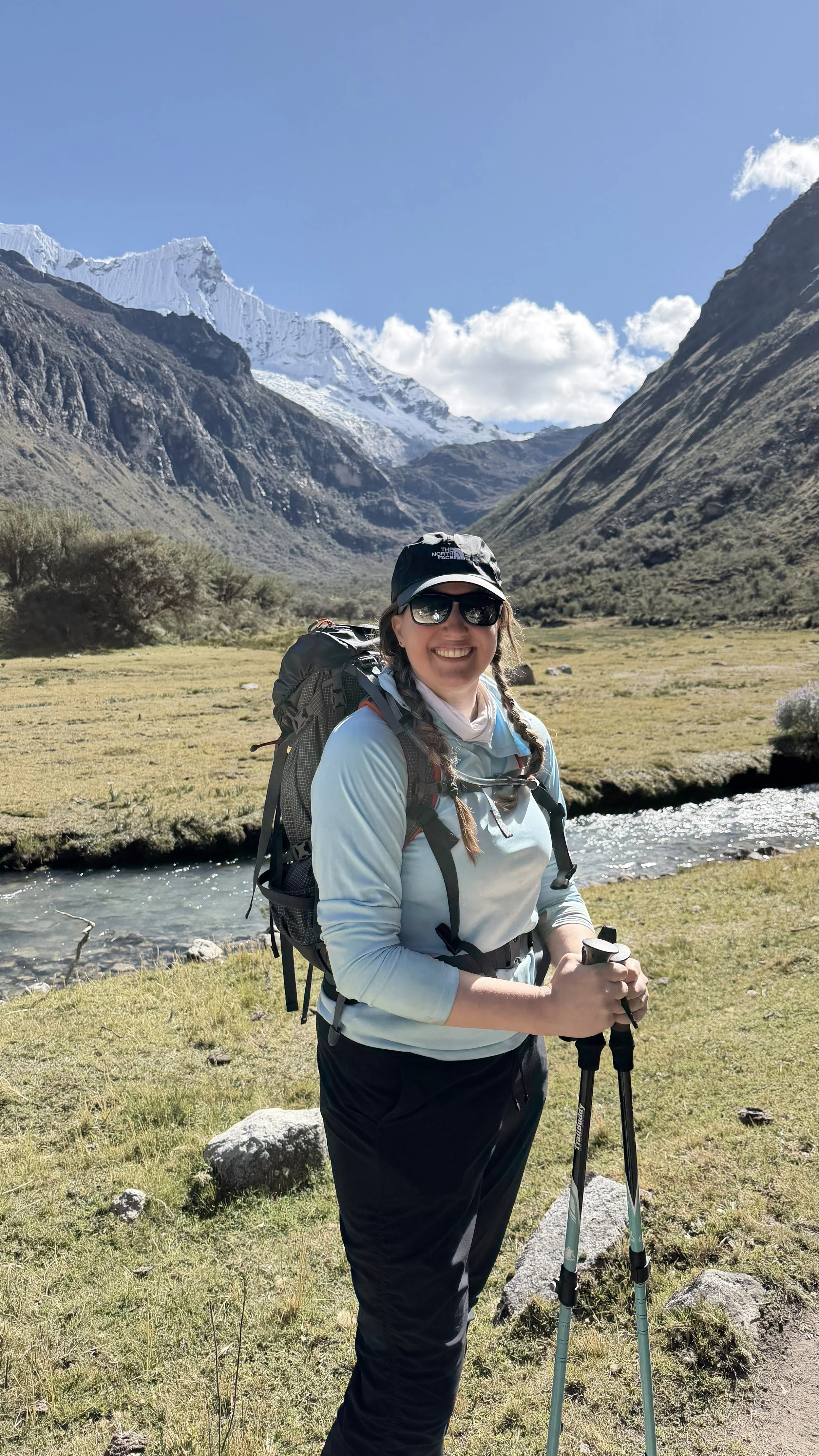
The hike started flat, and for a glorious few minutes, I was keeping up with the team. But the second the trail turned skyward, the illusion shattered. I dropped straight to the back with the sweep guide who stayed just far enough ahead of me to be out of sight.
The isolation caught up to me. Halfway up to the high lake, the frustration and overwhelming loneliness boiled over, and I sat on the trail and wept. When Nacho checked on me, I told him flat out, "I don’t think I can do this." He told me not to compare myself to the others, but it was too late. The group had their inside jokes; I was alone.
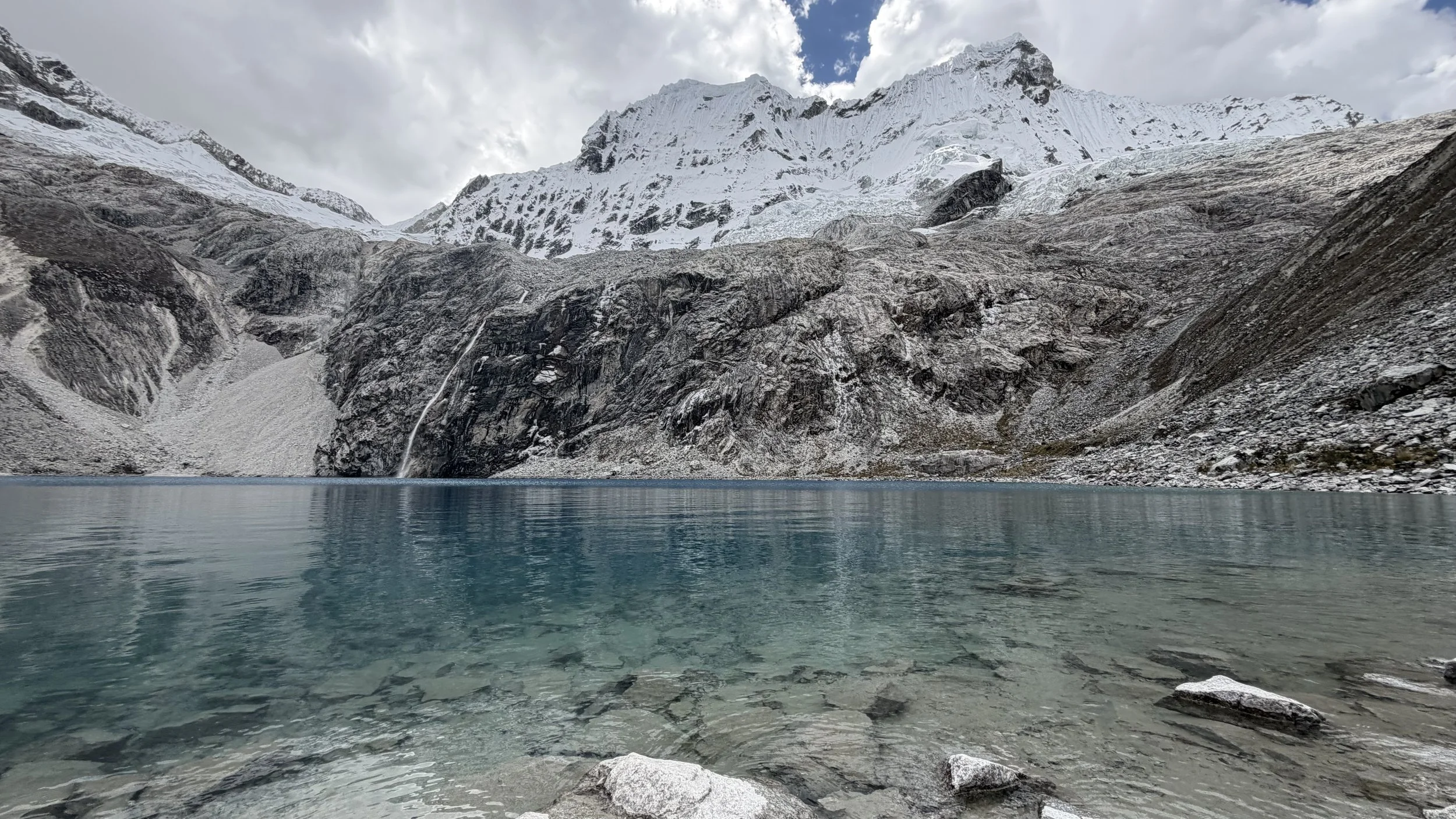
Laguna 69
By the time we reached the lake, my body was falling apart. I was hit with severe stomach cramps, nausea, and a blinding headache. I wanted to take a break, but had to climb behind the boulders to relieve my diarrhea. Shilen was incredibly kind, admitting he was struggling too, caught in the limbo between the main group and me. But the physical toll was accelerating.
That night at dinner, a persistent cough started rattling in my chest. Nacho casually mentioned that tomorrow we would trek to high camp at 5,000 meters (16,000 feet). I crawled into my sleeping bag at 7 p.m., feeling entirely wasted.
At 16,000 feet
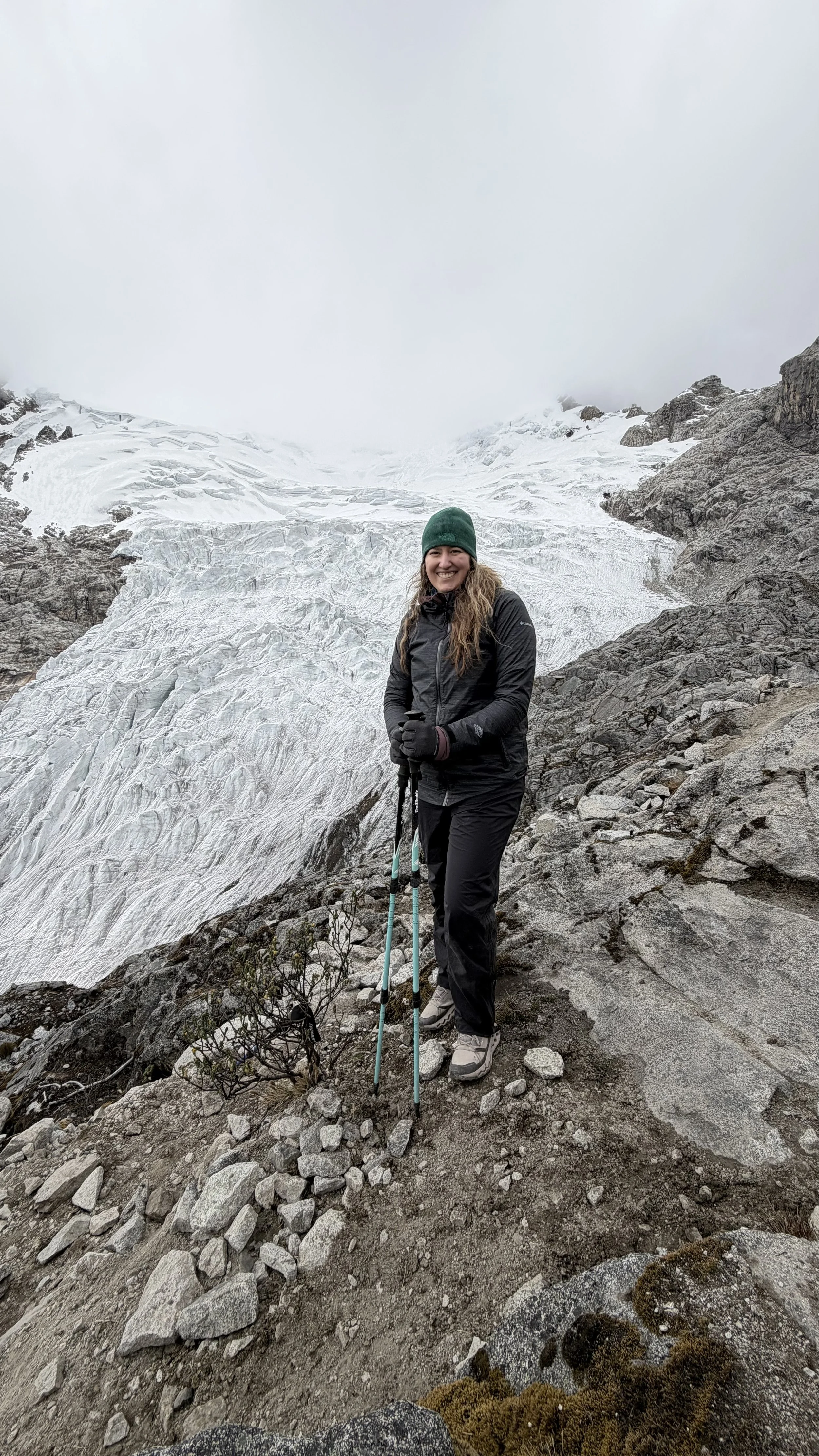
On June 19th, I woke up trying to force a positive mindset into existence, but the trail to the moraine high camp didn’t care about my attitude. It was steep, rocky, and entirely unrelenting. Jacob stayed by my side today, but the damage was already done. About ten minutes outside of camp, my body hit another wall.
It came on fast and furious: a pounding headache behind my eyes, intense dizziness, and waves of nausea. The moment we reached the high camp, I stumbled straight into the tent and collapsed onto the ground. I tried to relax, but started losing feeling in my fingers.
Panicked, I dragged myself out of the tent and over to the dining fly to find Nacho. He clamped the pulse oximeter onto my finger. 86%. He told me it was normal for this altitude, gave me some ibuprofen, and had the cook make me some soup, though I could barely force half of it down.
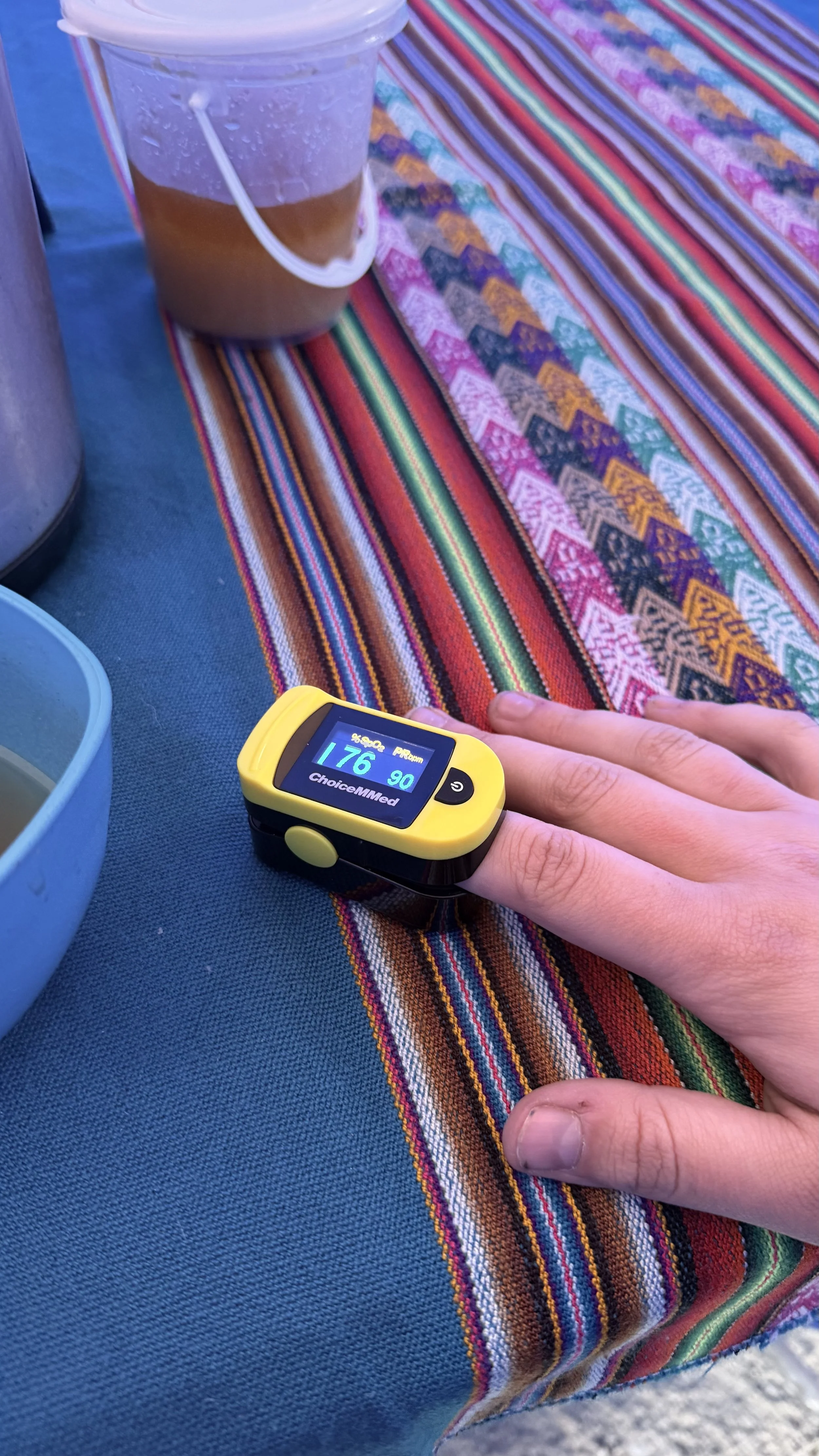
The ibuprofen temporarily took the edge off, but a few hours later, the migraine returned with a vengeance. Before dinner, Nacho checked my oxygen levels again. This time, the screen read 75%.
He still maintained it was within an acceptable range for 16,000 feet, handed me Diamox, and told me a third guide was arriving the next morning via a taxi to the trailhead—meaning if I needed to call the trip and head back down to Huaraz, the option was there, but it was up to me.
Sitting in the freezing dining tent, staring at a plate of steak and eggs I couldn't bring myself to eat, the romantic illusion of the expedition completely shattered. And that’s when the most uncomfortable truth of the trip settled in.
When that 75% flashed on the screen, my internal reaction wasn’t panic. It wasn't “How do I fix this?” It was an overwhelming sense of relief.
I’m ashamed to admit it, but I didn't want the Diamox to work. I was so profoundly exhausted, so lonely at the back of the pack that I wanted that number to be my exit ticket. I didn't want to force myself onto a freezing glacier the next morning. I just wanted my husband. I just wanted my parents. I just wanted to go home.
Choosing the descent
The next morning, my oxygen had only crawled back up to 79%, and my head felt like it was splitting open. Nacho didn't look thrilled when I told him I was calling it, but he reminded me that mountaineering is about making the right decisions, not just standing on top of a peak.
As I sat at camp waiting for the guide that would hike me out, the typical self-doubt crept in: Am I just being soft? I feel okay sitting still right now, am I just quitting? But the moment I stood up and began the trek back down to the road, the altitude reminded me of reality. I was painfully slow, dizzy, and fighting the urge to throw up with every step.
The aftermath
The transition back to reality was strange and heavy. I made it to a hotel in Huaraz on June 21st, completely drained. I spent the entire next day in bed and made the call to change my flights and go home.
It’s easy for someone on the outside to look at a failed expedition and reduce it to a lazy brush-off like “Maybe you’re just not a mountain climber.” (Unfortunately yes, that was said to me on this trip.)
But the truth I brought home with me is that mountaineering is, first and foremost, a mental battle. I knew this in theory, but I wasn’t fully prepared for the toll it would take on me this time around.
Your body can endure an incredible amount of physical suffering if your mind is locked into a purpose. By the time my oxygen hit 75%, my physical body was short-circuiting, yes—but it was my mind that had run entirely out of fuel. The constant anxiety of feeling unorganized, not really knowing what each day would bring, and the emotional tax of isolation was what ultimately emptied my tank.
I didn't get a summit photo to post on Instagram. But I walked away with a profound empathy for what it truly means to push yourself to the absolute limit, and clarity to know exactly what—or who—I need by my side the next time I choose to climb.
I know what’s coming. You’re going to ask me “Well, what’s next?”
To be completely honest, it has taken me a while of sitting at home just to untangle everything that happened out there and put it into words. The dust still hasn't fully settled—I’m still going through every stage of grief—sometimes all of them in one day. I don't know what this means for my future in the mountains, or what adventure comes next. But I’m honestly okay with that for now. But I’m not giving up—even if it’s mostly out of spite for the person that told me I shouldn’t climb anymore.
I’ll be sure to let you know as soon as I know what’s next. ;)